Case study 01
UBAYAK
UBAYE VALLEY, FRANCE – AUGUST 2026
The situation
Éric Deguil was due to race the Oetz Trophy in Austria, the final of the extreme kayak sprint world championship. I had spent a month preparing to cover it: scripts, scouting, light times, sessions booked with him across several days. A flood and a landslide closed the river and the event was cancelled.
Within hours, Éric entered the Ubayak instead — a race on the Ubaye, in the southern Alps, the same week. France was in drought and no whitewater was expected in the Pyrénées before winter, so this was the last chance of the season to photograph him on the water. I left four days later, having never seen the river or the valley.
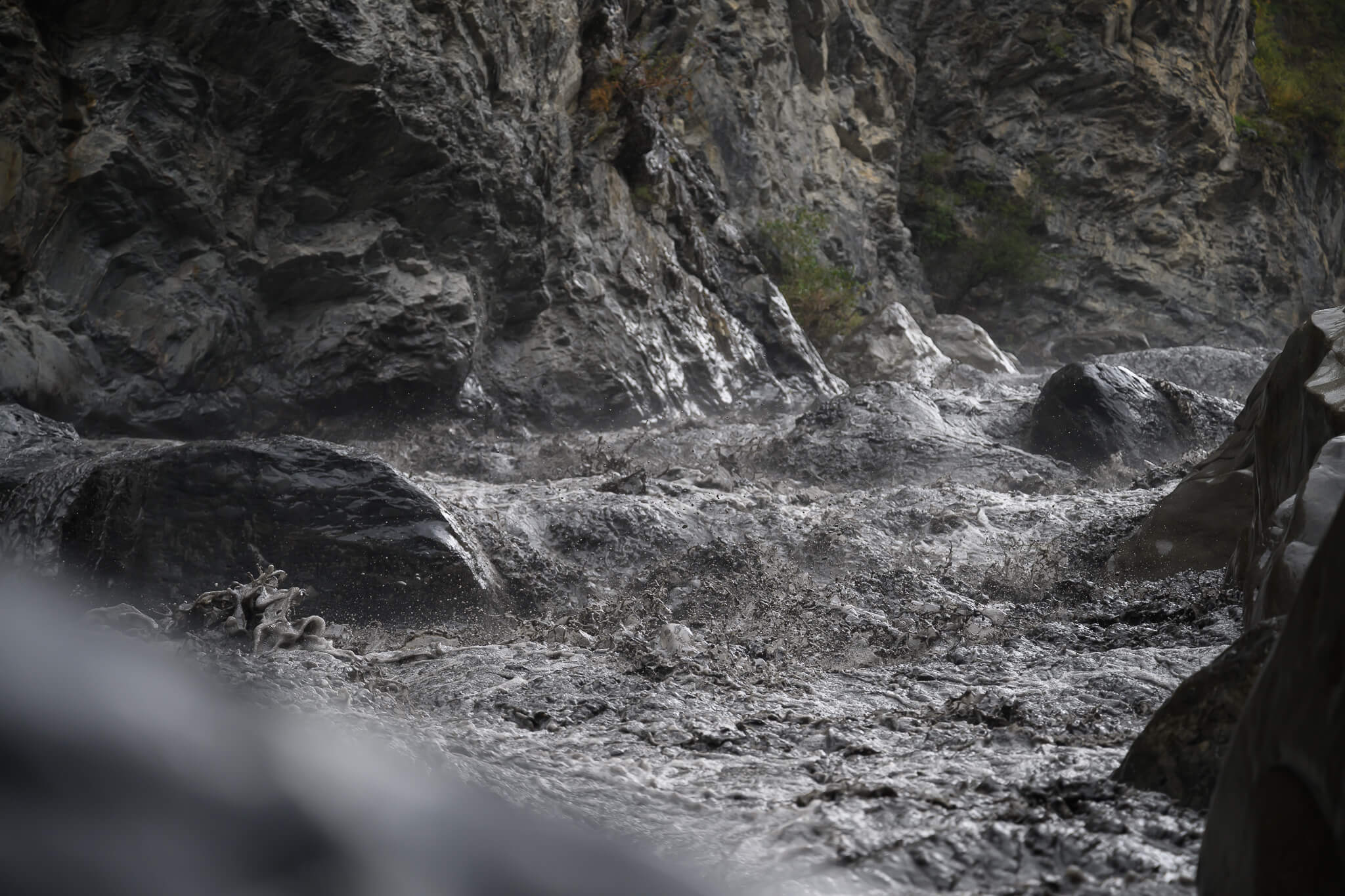
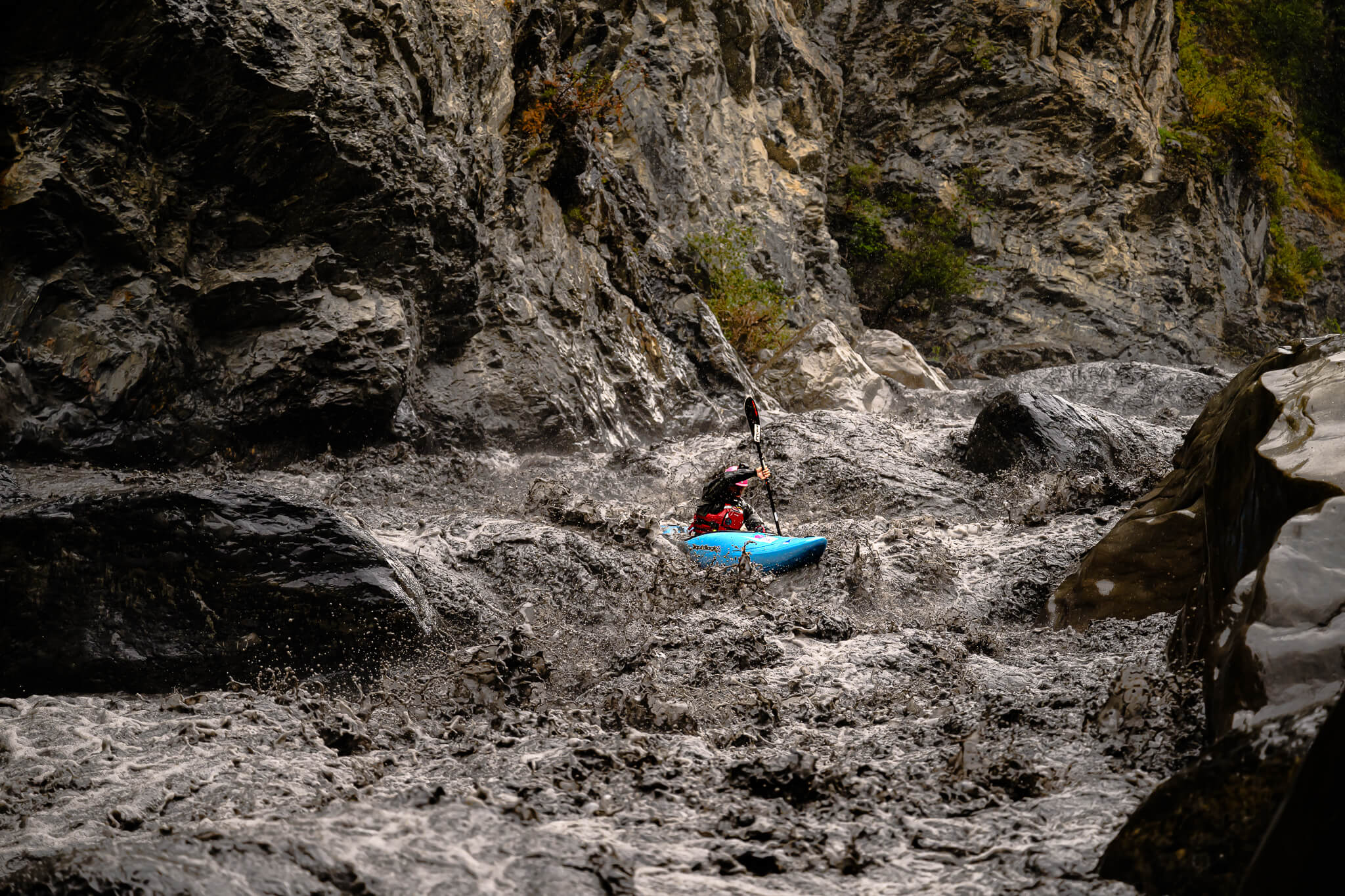
On the Friday before the race, the Ubaye came up in heavy rain and Éric ran the gorge at that level.
Nobody had commissioned the weekend.
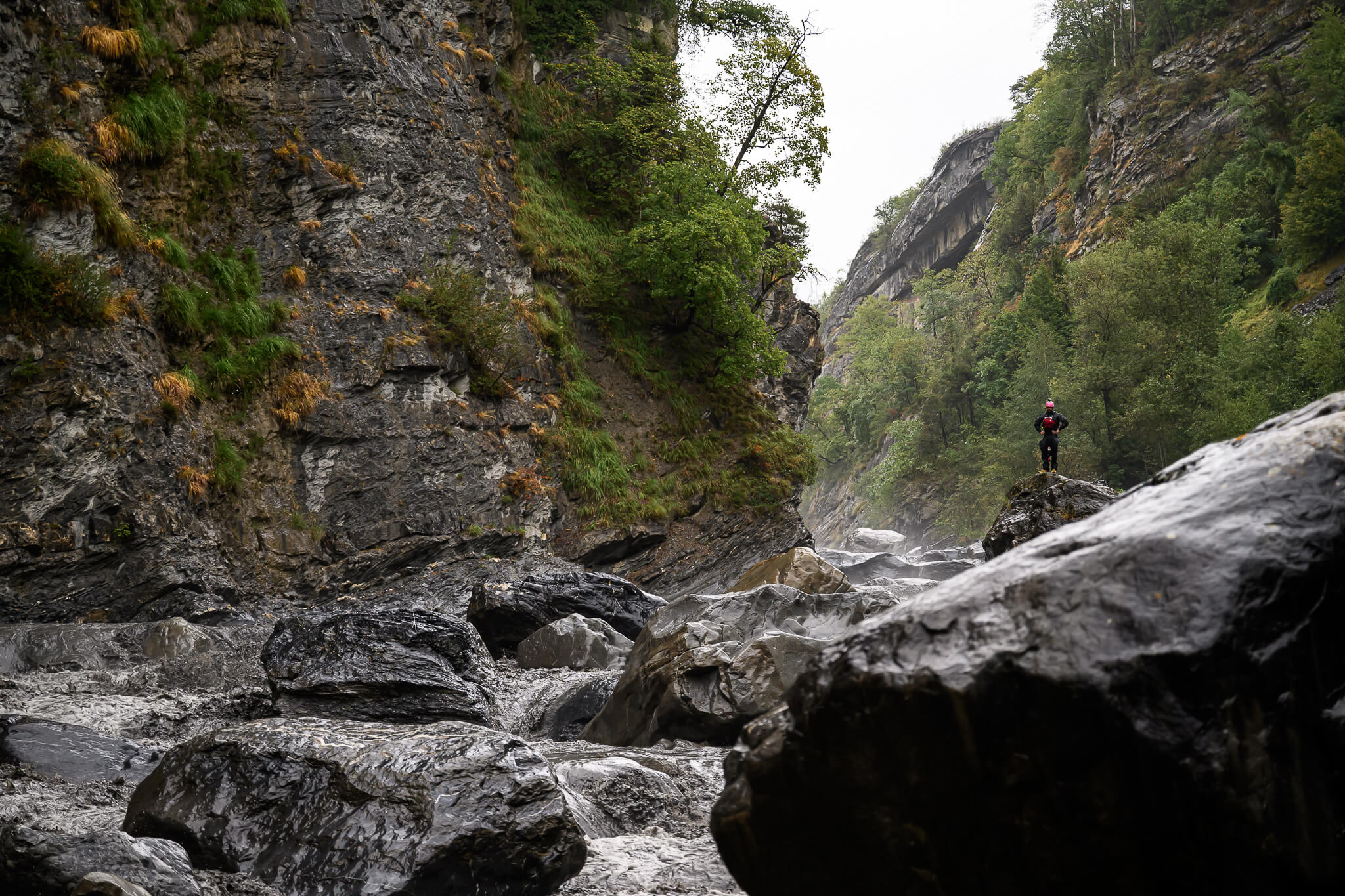
Ubaye gorge
My role
Because nobody had commissioned it, the first decision was not about pictures. It was about rights.
Before arriving, I agreed one thing with the organisers: I would work inside the event’s photo team on race day, and in return Éric’s runs and the whole of Friday stayed outside the event’s pool, with no constraint on stills or video. That agreement is what made every later use possible. Everything below depends on it.
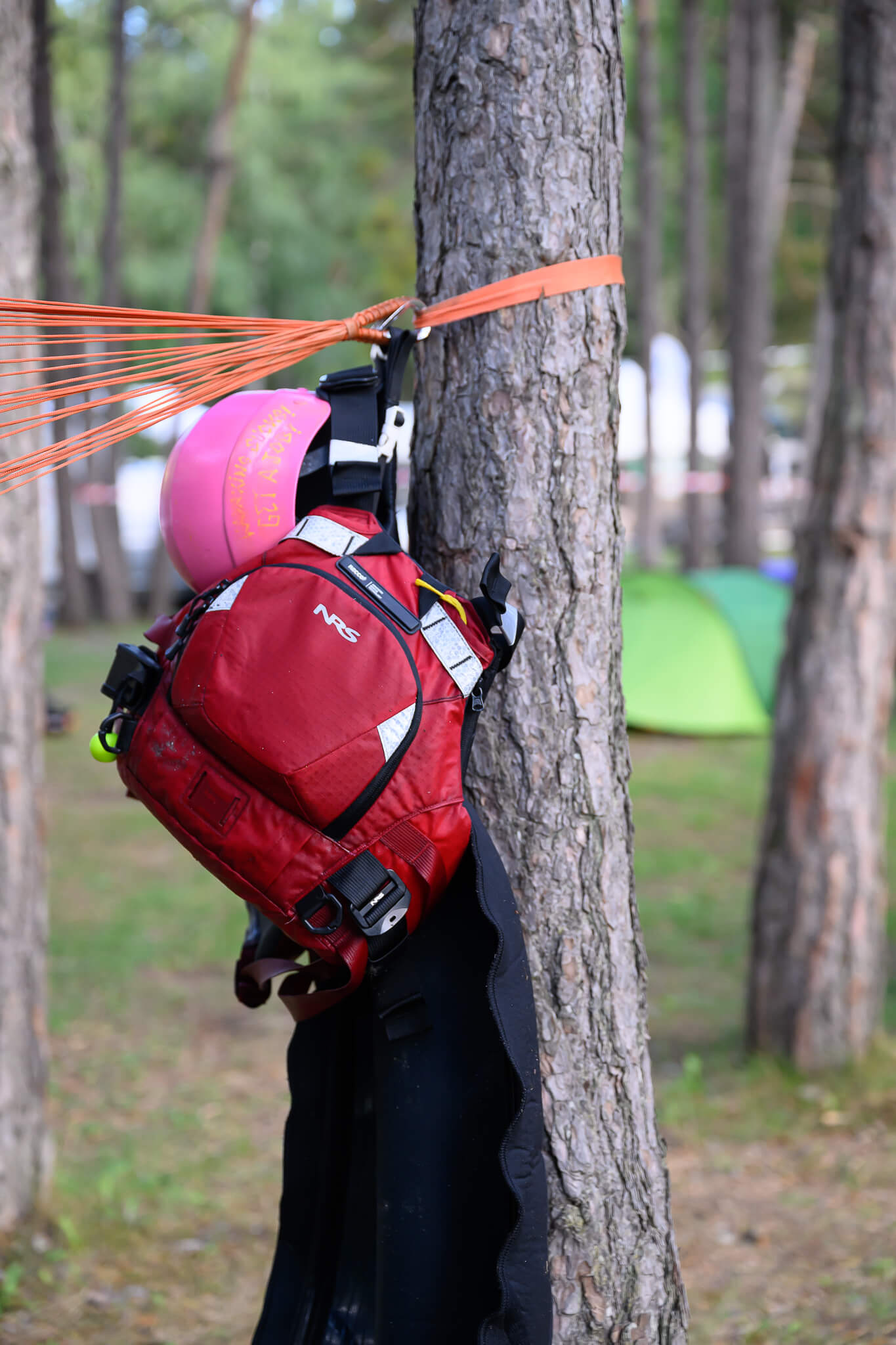
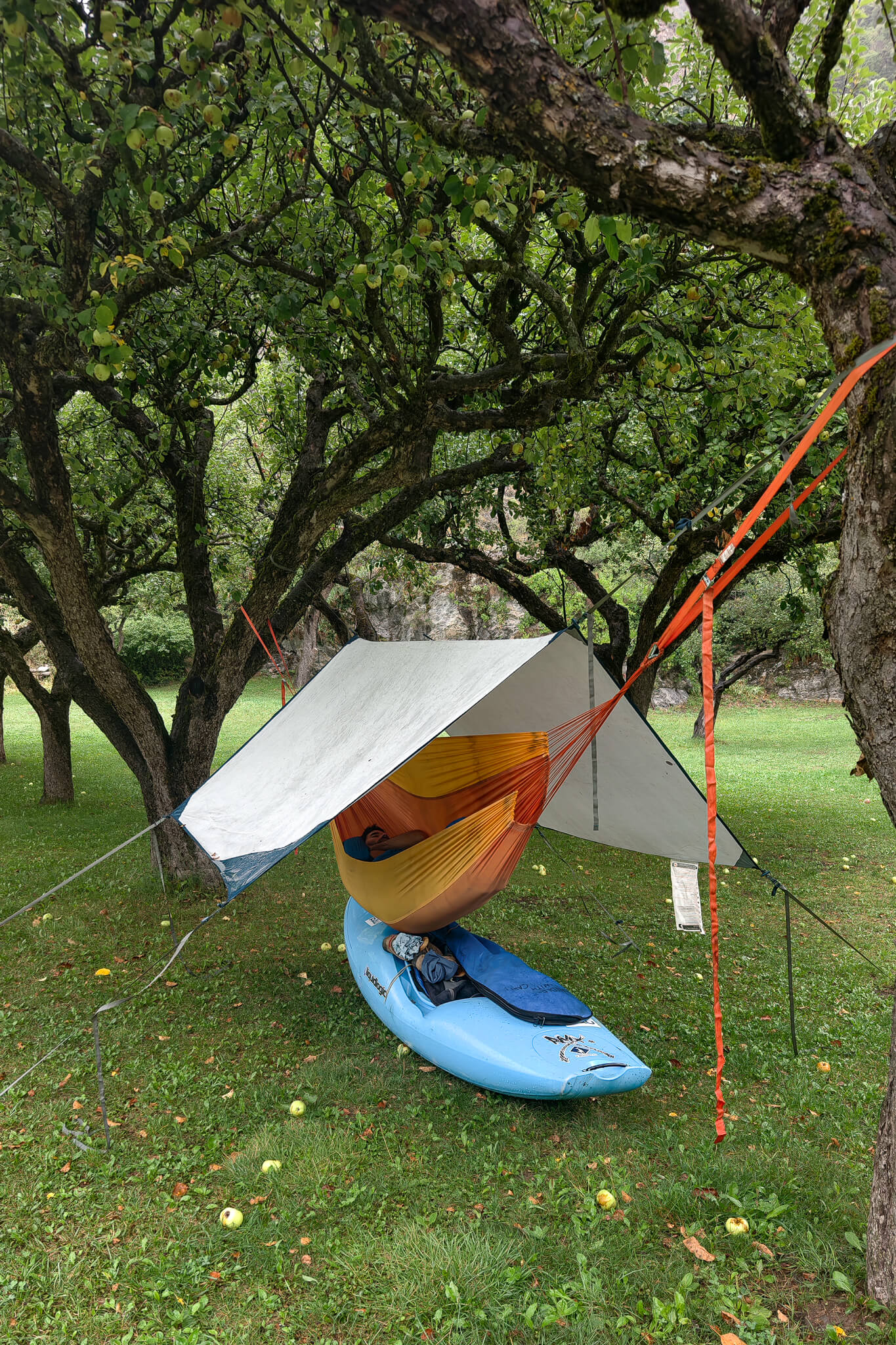
The second decision was to shoot for more than one destination. Over three days I covered three separate registers: the gorge at high water on Friday, the race on Saturday, and camp life in between — arrival, the hammock, gear hung out to dry. Each register could stand on its own, which meant three distinct bodies of work out of the same weekend.
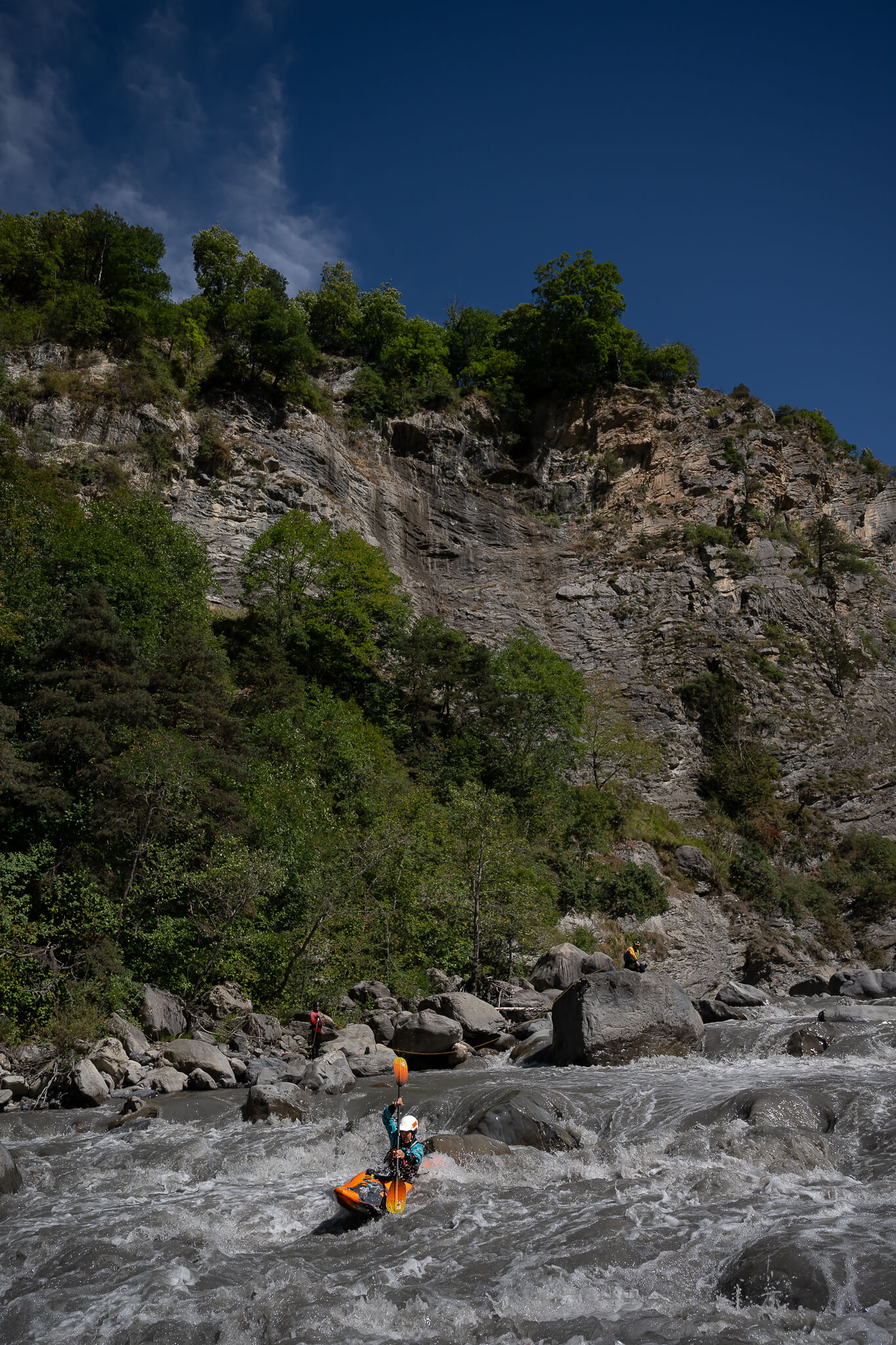
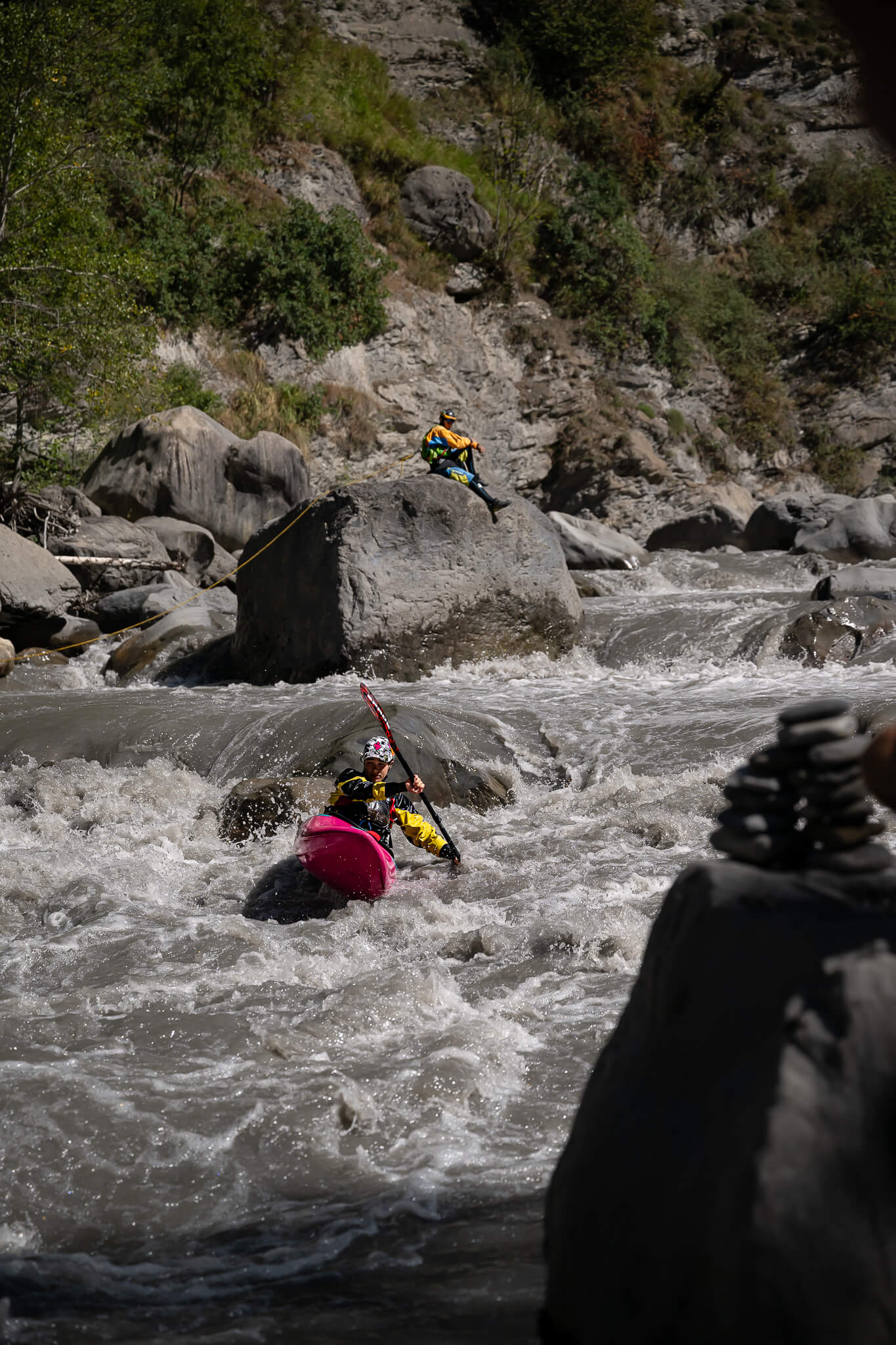
The third was not to bring back the same picture twice. The sprint ran on the stretch where I already had frames from the team race. I kept the position and changed the lens — 24 mm instead of the 70-200 — and shot the same rapid with the whole valley in it.
The rain and the access made Friday slow. They did not change what came out of it.

Same position — 200 mm

Same position — 24 mm
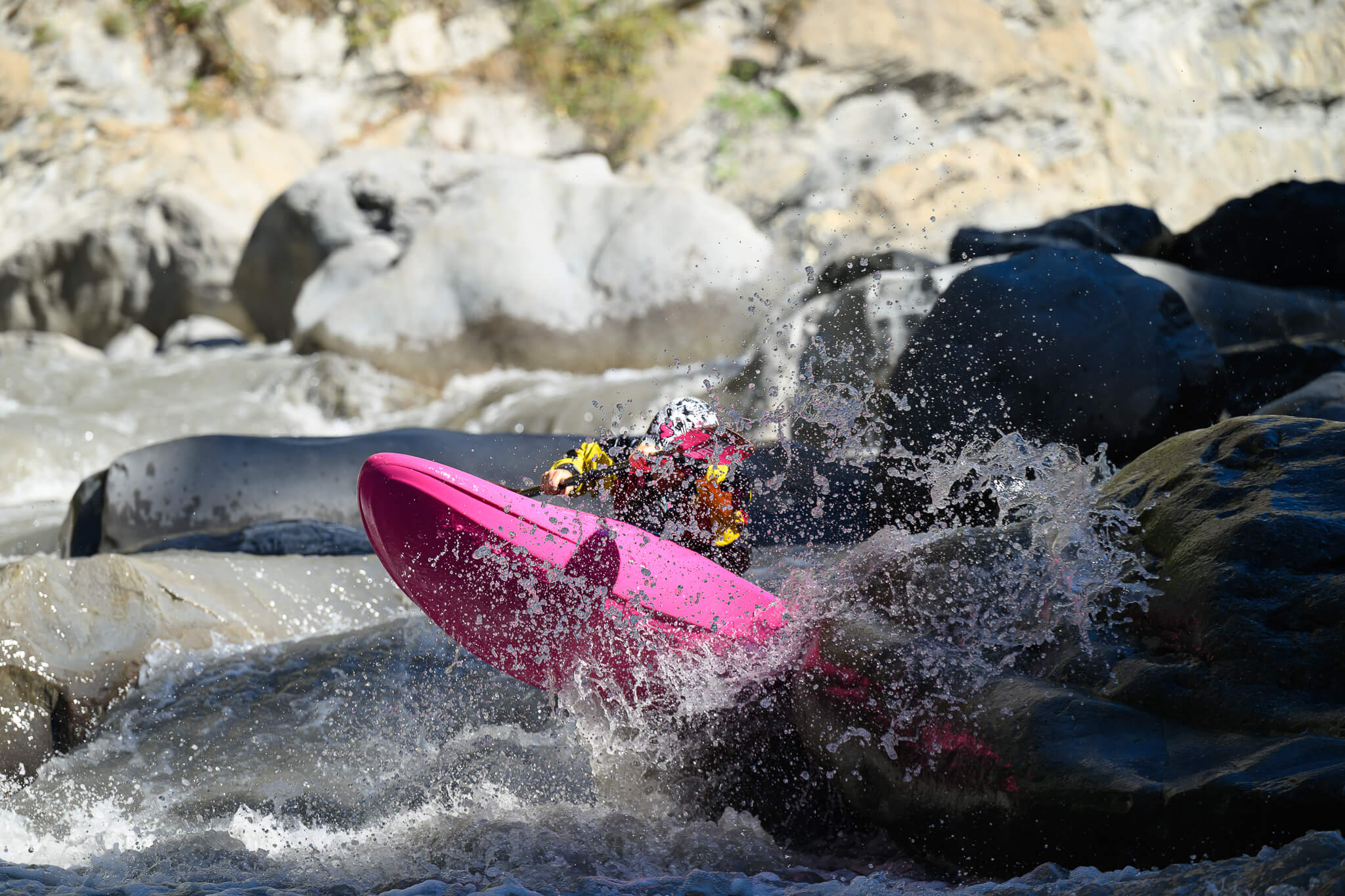
Ubayak — race day
What was produced
Éric put the Friday frames in front of the editor of Kayak Session, the international whitewater magazine. The editor offered two things: a place for the photographs in the magazine’s portfolio submissions, and the option of writing a piece to go with them. The race was already being covered, so I proposed a different subject — not the competition, but that single Friday, the water and the reading of the river. The editor took it and left us the angle.
Éric and I wrote it together, around 800 words. It went online on 18 September as A Brown Water Run on the Ubaye, photography credited to me. Three weeks from the riverbank to publication.
I sent the published piece to NRS the same day. Within hours they asked for a second version for Duct Tape Diaries, their own editorial channel: first person, in Éric’s voice, more river than race. A new angle needed new material, so I wrote a set of questions around it, interviewed Éric by phone, and built the piece from his answers — with a separate image edit so the two articles would not overlap. Delivered two days after the request.
The organisers received a first set of atmosphere and volunteer pictures within days of the event, and the full race edit — around 150 frames — once it was finished.
In mid-October, NRS came back for seven frames from the weekend — a commercial licence for its advertising and catalogue. Requested on 14 October, agreed the next day.

Camp

Camp
What the partner could use
One weekend. Three separate edits, built for three different uses.
For a brand, the value is not just the files. It is having images arrive with a clear destination, copy written for that destination, and the rights settled before the first frame.
It is also what made the licence a one-day conversation: the rights were clear from the start, so there was nothing to untangle.
The camp register is the one brands rarely hold and constantly need: gear in its real context, unstaged, with no shoot day attached to it.
Nobody commissioned the weekend. Seven weeks later, a brand licensed it.

Ubaye gorge
Photo: Cédric Eyma